Booklet
- Description
- "New York Needs Us Strong: Coping After Sept. 11" booklet created by Project Liberty. The booklet contains information about identifying mental health needs following a traumatic event and offers resources available through the crisis counseling program.
- Historical Notes
- New York State Office of Mental Health (NYOMH) administered and oversaw the design, implementation, and evaluation of Project Liberty, New York's FEMA-funded crisis counseling program that was created to respond to the aftermath of the attacks of September 11, 2001. LifeNet was a preexisting, toll-free 24-hour mental health hotline that offered multilingual services and provided information about mental health services.
Curator's Comment
At the time of the September 11th terror attacks, Michael Ragsdale, a New York City-based video producer, was employed as a senior technician for Audio Visual Services at the College of Physicians & Surgeons at Columbia University Medical Center and as an occasional video crew member for C-SPAN. His private passion was autograph collecting, a hobby fortified by his active participation in the Ephemera Society. On the morning of the attacks, Ragsdale voted in the NYC Primary Election and then headed to his first work assignment, where NY Governor George Pataki was scheduled to speak. Just before 9 a.m., while preparing the AV setup, Ragsdale noticed the beepers worn by Pataki’s staff beginning to go off simultaneously. They exited the building as a group, abruptly canceling the press conference—a signal to Ragsdale that something serious had happened. Sometime later, Ragsdale spotted hundreds of receipts littering the ground in the vicinity of a group of ATMs all marked with the same phrase: “Transaction denied, 9-11-01.” He paused to pick up and pocket one of the receipts, and an idea for a new collection was born.
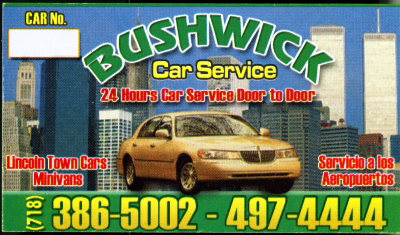
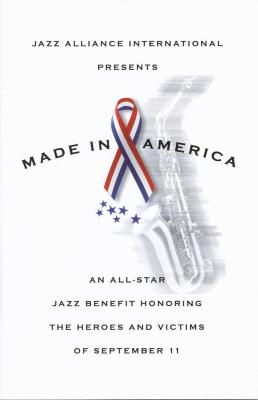
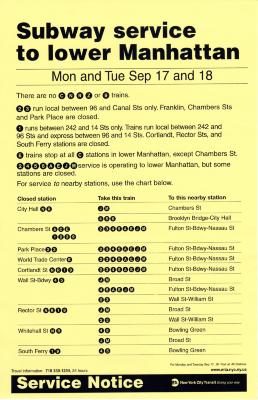
Ragsdale's impulse to collect ephemera related to the World Trade Center and the attack's aftermath culminated in a vast and unique archive of paper ephemera, including fliers, posters, brochures, cards, public notices, copies of speeches, lesser-known publications, and event programs. Not meant to be saved, most were mass-produced for easy distribution. Numbering over 4,000 individual pieces, the materials document a breadth of urgent messages and evolving information reflecting the efforts of New Yorkers to cope with 9/11’s disruptions and repercussions. Communications include expressions of mourning and tribute; cries for civic participation, discussion, and rebuilding; calls for volunteers; denunciations of terrorism and violence; pleas for peace, protest, or tolerance; offers of help from the federal government, state, city, and other service groups; and appeals for reflection, love, and prayer.
Chronologically, Ragsdale’s collection spans a 14-month period, from September 2001 through winter 2002. It is organized by category: Pre-9/11 Mailers; United Nations Ephemera; the 9/11 Brochures; Offers of Help and Healing; Calls for Peace and Tolerance; Religious Reaction; Red Cross and Travel Ephemera; Lesser Known Publications; One Year Anniversary Ephemera; and Miscellaneous Materials.
Ragsdale's impulse to collect ephemera related to the World Trade Center and the attack's aftermath culminated in a vast and unique archive of paper ephemera, including fliers, posters, brochures, cards, public notices, copies of speeches, lesser-known publications, and event programs. Not meant to be saved, most were mass-produced for easy distribution. Numbering over 4,000 individual pieces, the materials document a breadth of urgent messages and evolving information reflecting the efforts of New Yorkers to cope with 9/11’s disruptions and repercussions. Communications include expressions of mourning and tribute; cries for civic participation, discussion, and rebuilding; calls for volunteers; denunciations of terrorism and violence; pleas for peace, protest, or tolerance; offers of help from the federal government, state, city, and other service groups; and appeals for reflection, love, and prayer.
Chronologically, Ragsdale’s collection spans a 14-month period, from September 2001 through winter 2002. It is organized by category: Pre-9/11 Mailers; United Nations Ephemera; the 9/11 Brochures; Offers of Help and Healing; Calls for Peace and Tolerance; Religious Reaction; Red Cross and Travel Ephemera; Lesser Known Publications; One Year Anniversary Ephemera; and Miscellaneous Materials.
- Accession Number: C.2010.9.3304
- Dimensions: 6 in X 4 in
- Dimensions (Metric): 15.24 cm X 10.16 cm
- Source: Michael Ragsdale
- Credit Line: The Michael Ragsdale 9/11 Aftermath Paper Ephemera Collection
All materials made publicly available by the 9/11 Memorial & Museum on this site are intended for research and educational use only. Users may need to obtain other permissions for their intended use(s) and are responsible for determining copyright status and securing these permissions.
To inquire about copyrights and reproductions, contact: xxx@911memorial.org