Hat
- Description
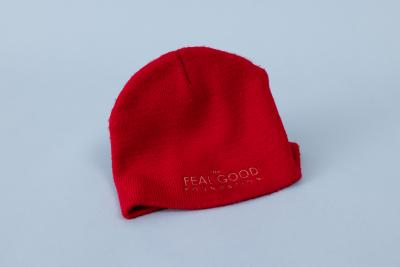
- Dark blue knit beanie with "FEALGOOD | FOUNDATION" embroidered in white on the front.
- Historical Notes
- Demolition worker John Feal was injured days after arriving at Ground Zero, resulting in the amputation of part of a foot. Initially denied compensation he believed he was due, Feal became a grassroots advocate for responders, recovery workers, and survivors facing illness and mounting medical expenses. The FealGood Foundation, established in 2005 to raise funds on behalf of recovery workers, championed the passage of the James Zadroga 9/11 Health and Compensation Act of 2010, the James Zadroga 9/11 Health and Compensation Reauthorization Act of 2015, and finally the "Never Forget the Heroes: James Zadroga, Ray Pfeifer, and Luis Alvarez Permanent Authorization of the September 11th Victim Compensation Fund Act" in 2019.
Curator's Comment
The 9/11 attacks continue to affect the health and well-being of victims’ families and friends, survivors, rescue and recovery workers, cleaning crews, and those living and working in the vicinity of the three crash sites. Some injuries were immediately obvious, requiring hospitalization, surgeries, and lengthy recuperations. Other injuries were less apparent, including emotional scars and later illnesses.
Almost immediately, questions arose about the long-term impact of exposure to the dust clouds that formed when the towers collapsed on 9/11 and the dangers of working at the site during the recovery. Days after the attack, the U.S. Environmental Protection Agency declared the air in lower Manhattan safe. Subsequent tests showed that the omnipresent dust—made of pulverized building materials, industrial chemicals, and electronics mingled with jet fuel residue—was hazardous. Critics accused the government of a failure to protect citizens and inconsistent enforcement of respirator use at Ground Zero.
Survivors, residents, workers, and concerned citizens fought for legal remedies for injuries, treatment expenses, and loss of work. After years of debate, the U.S. Congress passed the James Zadroga 9/11 Health and Compensation Act in 2010. The landmark bill provides financial compensation to individuals who suffered physical injury or death as a result of the 9/11 attacks and established a program that monitors and treats those with 9/11-related health conditions. Congress reauthorized the Zadroga Act in 2015, extending the compensation fund for five additional years and the health program through 2090. In 2019, after another lobbying effort, the compensation fund was extended through 2092. More than 95,000 people living in all 50 states have enrolled in the World Trade Center Health Program.
Almost immediately, questions arose about the long-term impact of exposure to the dust clouds that formed when the towers collapsed on 9/11 and the dangers of working at the site during the recovery. Days after the attack, the U.S. Environmental Protection Agency declared the air in lower Manhattan safe. Subsequent tests showed that the omnipresent dust—made of pulverized building materials, industrial chemicals, and electronics mingled with jet fuel residue—was hazardous. Critics accused the government of a failure to protect citizens and inconsistent enforcement of respirator use at Ground Zero.
Survivors, residents, workers, and concerned citizens fought for legal remedies for injuries, treatment expenses, and loss of work. After years of debate, the U.S. Congress passed the James Zadroga 9/11 Health and Compensation Act in 2010. The landmark bill provides financial compensation to individuals who suffered physical injury or death as a result of the 9/11 attacks and established a program that monitors and treats those with 9/11-related health conditions. Congress reauthorized the Zadroga Act in 2015, extending the compensation fund for five additional years and the health program through 2090. In 2019, after another lobbying effort, the compensation fund was extended through 2092. More than 95,000 people living in all 50 states have enrolled in the World Trade Center Health Program.
- Accession Number: C.2023.69.2
- Dimensions: 10 in X 8 in
- Dimensions (Metric): 25.4 cm X 20.32 cm
- Source: John Feal
- Credit Line: Gift of John Feal dedicated to those we lost and continue to lose
Health EffectsNever Forget the Heroes: James Zadroga, Ray Pfeifer, and Luis Alvarez Permanent Authorization of the September 11th Victim Compensation Fund Act. Rescue and Recovery
All materials made publicly available by the 9/11 Memorial & Museum on this site are intended for research and educational use only. Users may need to obtain other permissions for their intended use(s) and are responsible for determining copyright status and securing these permissions.
To inquire about copyrights and reproductions, contact: xxx@911memorial.org