Photograph, Print
Michael Lomonaco, Executive Chef, Windows on the World, 1 World Trade
- Description
- Life-sized Polaroid photograph taken by Joe McNally depicting Windows on the World chef Michael Lomonaco. Lomonaco wears his chef's jacket and holds a pair of glasses.
- Historical Notes
- In 1997, Michael Lomonaco was hired as Executive Chef at Windows on the World, a restaurant located at the top of the World Trade Center’s North Tower. The mission assigned to the Brooklyn-born chef-innovator was twofold: run the kitchen of the popular dining venue and transition its traditional French menu to a modern American cuisine and wine list. Lomonaco’s success was quick, measured in food critics’ accolades and Windows on the World’s subsequent ranking as one of America’s highest-grossing restaurants.
On the morning of 9/11, Lomonaco was having his eyes examined and his glasses repaired at the LensCrafters store in the concourse level of the World Trade Center. Around 8:46 a.m., Lomonaco felt a strange shaking and rumbling underfoot, which turned out to be the impact of hijacked Flight 11 crashing into the North Tower. Upon heading to street level, he was horrified by the sight of fires and black smoke engulfing the upper floors of the building where he worked. He was urged by first responders to evacuate the area.
By day’s end, Lomonaco was wrestling with the unfathomable grief of having lost over 70 coworkers and then unknown numbers of Windows on the World guests and conference attendees. In the aftermath, he channeled some of that personal sorrow into preparing meals for the Ground Zero recovery workers. He also assumed a leading role in establishing Windows of Hope, a charitable relief foundation focused on aiding families of victims working in the food, beverage, and hospitality industry.
Michael Lomonaco has contributed his story to the 9/11 Memorial Museum’s oral history collection as well as recorded remembrances for Windows on the World colleagues.
Curator's Comment
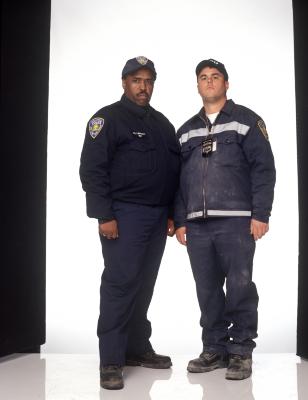
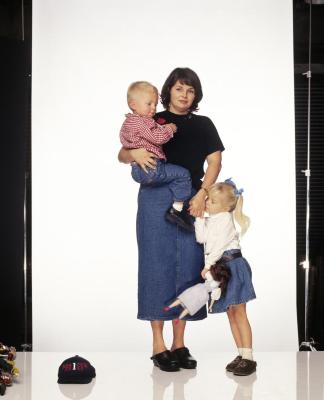
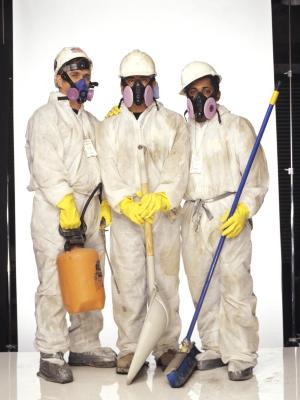
In the weeks after September 11, LIFE Magazine photographer Joe McNally (b. 1952) invited rescuers, recovery workers, survivors, and bereaved family members to a studio in Manhattan’s Bowery district, not far from Ground Zero. Here, the participants were memorialized by a unique Polaroid camera—dubbed the Moby C—equipped with a lens from a U-2 spy plane. This room-sized instrument could capture an exposure of singular clarity on an eight-foot tall piece of film in the blackened studio. Each 90-second session required meticulous staging and absolute stillness. Whereas most photographers were concentrating on documenting the devastation of the attacks downtown, McNally was interested in recording the heroism and sorrow etched into the human faces at the center of this national tragedy. Those who faced the camera were mostly everyday people who sought no special recognition. “They came only with the intention of participating in a project, telling their story, and sharing in the telling of others,” McNally reflected.
The 9/11 Memorial Museum has enjoyed a long relationship with McNally's images. In 2006, McNally donated his portrait of FDNY Ladder 20 firefighter Adrienne Walsh to support the Museum’s nascent permanent collection. When the outdoor Memorial opened to the public in 2011, a selection from the series was borrowed from the photographer and rotated onto view in the temporary Visitor Center at 90 West Street. Annual acquisitions from the Faces of Ground Zero archive have continued, often as gifts arranged by McNally. In 2017, the Museum assumed custody of the remaining Polaroids in an agreement that will result in the collection’s completed donation by 2027.
The image in this record is the product of a color transparency from a Mamiya RZ 6x7 Pro II 120 format camera that McNally positioned to record a shot simultaneous with the Polaroid Moby C’s flash of light. The unique, original Polaroid exhibits a more subtle and creamier tonality.
The 9/11 Memorial Museum has enjoyed a long relationship with McNally's images. In 2006, McNally donated his portrait of FDNY Ladder 20 firefighter Adrienne Walsh to support the Museum’s nascent permanent collection. When the outdoor Memorial opened to the public in 2011, a selection from the series was borrowed from the photographer and rotated onto view in the temporary Visitor Center at 90 West Street. Annual acquisitions from the Faces of Ground Zero archive have continued, often as gifts arranged by McNally. In 2017, the Museum assumed custody of the remaining Polaroids in an agreement that will result in the collection’s completed donation by 2027.
The image in this record is the product of a color transparency from a Mamiya RZ 6x7 Pro II 120 format camera that McNally positioned to record a shot simultaneous with the Polaroid Moby C’s flash of light. The unique, original Polaroid exhibits a more subtle and creamier tonality.
- Accession Number: C.2020.37.1
- Dimensions: 109 in X 44 in X 0.08 in
- Dimensions (Metric): 276.86 cm X 111.76 cm X 0.2032 cm
- Source: Joseph McNally
- Credit Line: Collection 9/11 Memorial Museum. © Joe McNally.
All materials made publicly available by the 9/11 Memorial & Museum on this site are intended for research and educational use only. Users may need to obtain other permissions for their intended use(s) and are responsible for determining copyright status and securing these permissions.
To inquire about copyrights and reproductions, contact: xxx@911memorial.org